
The Lost Legacy of Little Miss Cornshucks
She put the teardrop in ‘Try A Little Tenderness’
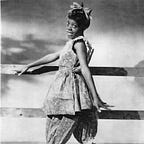
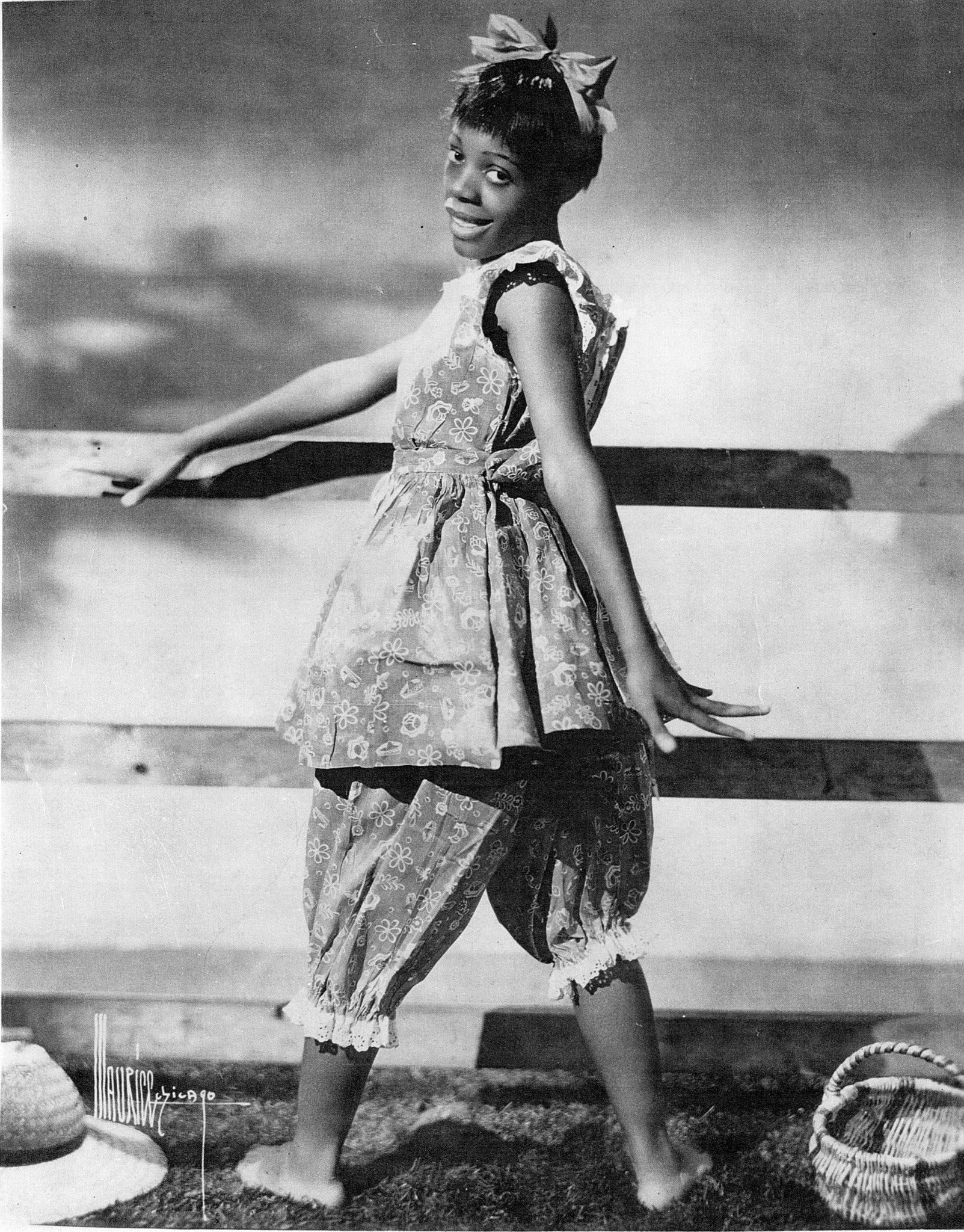
Chicago. It’s the late 1930’s and a young Mildred Cummings from Dayton, Ohio is barefoot, standing in the spotlight on stage, wearing that same old shabby dress and a broken straw hat. This is Little Miss Cornshucks and she has the audience in the palm of her hand, a unique act and larger than life personality. By the 1940’s she made top-billing at nightclubs across America, performing heartbreaking ballads. The great Ahmet Ertegun of Atlantic Records, the man who pioneered rhythm and blues said “She could sing the blues better than anybody I’ve ever heard.”
Author and poet Salena Godden travels to downtown Chicago in search of the missing legacy of Little Miss Cornshucks, the best blues singer you never heard. She meets unofficial biographer Barry Mazor, who spent years tracing her tale. Ninety-eight-year-old former dancer Lester Goodman remembers the ‘black and tan’ nightspots that Cornshucks commanded, now long gone. And, taking a road trip on Route 65 to Indianapolis, Salena visits the home of Mildred’s family, her daughter Francey and grand-daughter Tonya, filled with pictures, music and memories.
Why did this unique voice, that could so easily lift or reduce an audience to laughter and tears, die in complete obscurity, with her influence unmarked and unrecognised? The song ‘Try A Little Tenderness’ became a powerhouse hit for both Aretha Franklin and Otis Redding. Salena invites us to take a moment to listen back to the inimitable Little Miss Cornshucks earlier version, to make the case for a lost legend of blues.
Audio: BBC archives, broadcast 2014 - https://www.bbc.co.uk/programmes/p026tsl9
Dear friendly friends,
I feel like starting this new year by sharing this post, this audio archive I found and talking about this one song.
The other morning I woke up singing - Try A Little Tenderness - remembering the first person switch, singing it as woman, as she, as I, just as Little Miss Cornshucks and later Aretha Franklin chose to, a bit like this…
I may be weary
Women do get weary
Wearing the same shabby dress
But while I’m weary
Try a little tenderness
I may be waiting
Just anticipating
Things I may never possess
Oh, but while I'm waiting
Try a little tenderness
I make coffee and think about this one song and all it means to me. I watch a light snow fall outside my window, and then listen to it, again, the Aretha version and then an early take of an Otis version. I think about the meaning of this song to us, to me, and the lyrics. I ponder on what ‘tenderness’ could mean in that crazy violent world and what it means now in this crazy violent world.
The dictionary meaning: Tenderness, the quality of being gentle, loving, kind.
I sit with all the feelings this melody conjures, and notice how the song changes shape and power when sung in first person. the things I may never possess. Then I remember the lost Cornshucks version and recall what a tough and tumultuous life she was living when she sang and recorded her rendition of this.
So next thing I know, I find myself rummaging through my archives, boxes of discs and files and old computers to find this one documentary we made one snowy January in Chicago back in the day. Was it 2013? 2014? Of course, all of this is a great procrastination from doing my tax return. I know, I know … but I am glad to find this recording and now share it here as I think some of you might dig hearing this and the sounds of old Chicago too.
Listening back to this show we made maybe twelve-odd years ago, my mind floods with images and fond memories of that trip to America. I remember the thrill of travelling with my producer, the brilliant Rebecca Maxted, I remember the heavy snow in Chicago and seeking the jazz ghosts of Cornshucks. I can recall us sharing Chicago deep-filled and thick crust pizzas and beers, and then exploring incredible lively jazz and blues clubs. I remember with great fondness all the beautiful people we met and talked to. The wonderful Lester Goodman, then aged 98, sharing his stories with so much kindness and sass and soul. The gorgeous and generous family of Cornshucks who welcomed us with open arms and fed us stories and delicious food. It is with gratitude I remember them all here. As I listen to this programme it already feels as though it is a recording of a different me in another life in the old times far away from the here and now.
But the music is forever, the song is timeless, the story never changes.
As I listen to this documentary, it occurs to me how it important it is that we hold onto beautiful beginnings and precious things. That we preserve the art and recordings and work we love to make. This is my way of reminding you to remember to make back ups and copies, hold onto the work you have done and the pictures and the diaries, and be sure to be your own diligent archivist. Protect your work, the art, the music, the books and poetry, share the songs and stories, keep passing the flame, keep the fire of truth alight and the love flowing.
It is sad to see how it goes, all that labour, all that hard work lost, whether it is a story from years ago, or a story of now, replaced or replicated by AI. Same difference. Do you see what I mean?
So much of the heart of a thing can be forgotten or erased. We have all lost so many people and memories and work over the years, not all of it was genius, of course, not all of it was a hit or a commercial success, but so much of it contained original soul and it gets destroyed or abandoned as we leap to the next new thing or big trend. Not all the good stuff lives forever, not everything stands the test of time. Then there are the rigours of the itinerancy of being young, being skint, touring and moving rooms and accommodation, all those lost letters, photos, tapes, diaries, first takes, first drafts. We lose so much as the years pass, also as fashion and technology dictates things for us, as formats die or sites go out of favour.
It feels like we lose our way in shiny hallways, inside machines and technology, we give our money to bosses at Spotify instead of to support the art and artists, venues and theatres, bookshops and record shops and in doing this sadly we lose a piece of ourselves too.
We leave pieces of our story, scatter crumbs of first lines of new poems and photos and thoughts and dreams, we abandon early drafts of work on social media sites, discarding Myspace to go to Facebook to Twitter to Instagram to Substack and on and on it goes. Our first handprints are everywhere, like early cave paintings, we have been decorating the web with a beautiful and earnest early internet life, leaving electronic meadows of art and poems left locked in accounts we abandoned, as nobody can remember the old passwords.
This Christmas, Santa kindly left a new record player under our tree and we spent the first week of the year hibernating and making soup and recovering from the nasty lurgy flu that everybody passed onto everybody. We were so happy, offline, listening to old albums, playing gorgeous crunchy jazz and blues, Miles Davis, Otis Reading, Sam Cook, Aretha Franklin, Nina Simone and …
Little Miss Cornshucks - the greatest blues singer you never heard of.
Mildred Cummings, see her, standing there on stage in bloomers with bare feet, dressed like a deep-south country girl, with a ripped straw hat. During her heyday she was top of the bill at notorious speakeasies like The Delisa Club and The Rhumboogie. She performed to integrated ‘black and tan’ audiences, a mix of rich and poor, from Hollywood stars like Mickey Rooney and Frank Sinatra to factory workers. Even if it wasn’t intentional, her evocative costume and cute and comical act must have reminded some in the audience of their own humble beginnings, while also provoking white members of the crowd to check their prejudice and privilege. This had the audiences enraptured. And it was then, just as she had the audience in the palm of her hand, she’d sing her heart out. She’d walk to the edge of the stage, sit down there, swinging her bare feet, singing the opening lines of her inimitable version of Try A Little Tenderness. Her voice silencing the room – I may get weary – as she boldly shared her pain and vulnerability, and as she sat there wearing that same old shabby dress.
She died penniless and practically forgotten, like a true outsider.
And that’s a thought that I often come back to, how the outsider is who everybody wants to be or aspires to be. That wild and free, rare and unique voice. The Outsider who will stand her ground, speak the truth, document these times and narrate our present day from a fresh and clear perspective that is unsullied by fashion and ahead of the zeitgeist. But this outside work, the work that is copied, the original, see now, how it can get lost or pushed aside or just forgotten.
You can easily conjure a romantic image of an outsider writing in a dusty garret. See how she guzzles cheap red wine with blue stained lips and bad teeth, writing with the last nub of pencil by candlelight. There is never any money on the outside. There may be some applause, maybe, but clapping won’t ever pay the rent. However, I still believe that the outside is where the good work and best art thrives and lives, with hunger and raw truth, bold heart and brave soul.
I love poets, writers, artists, people that have their own rhythm, spice and kick, that can find a voice of their own and walk in a path they carve for themselves, in the footprints they got big enough to fill with their own perseverance. Yes, the ones that fit in no real box or category, they are all out there to be discovered in the real world and on the outside of the machines. This is the good stuff. These are the moments and the archives we must cherish and save, as the years fly by so fast, as we move so quickly from trend to trend, from best seller to smash hit, with our ever-shrinking attention span.
Let’s look after our outsiders, the courageous and unique and funny and clever and ridiculous and tragic and magic people that make the work and write the books that stay in your heart, the poetry and songs that tattoo your memories.
The truth is wherever you come from, writing hurts and art is messy, if you are doing it right. We all know there is great beauty in the solitude of creativity, the being true to you is where the great heart of any work beats.
OK enjoy the show, but before I go, here is my reminder to you. Back your work up now, save yourself, be your own archivist, save all of your work moving forwards, email it to yourself, print it off and post it to yourself. Don’t just share all of your first drafts and dreams and beautiful new ideas here on SubStack and hope here will be here when you are not posting here anymore. Hear me?
Everything is temporary, nothing is forever, not even this version of us.
If I was going to make a wish for 2026, I want you to show yourself tenderness, and then to show each other tenderness. If you listen to this song, whether it is this Cornshucks version, the Otis or Aretha version, when you hear it, she may be weary, try imagining the she is she, the she is you and me and us. I may be weary, the whole wide world is weary, she is weary, the earth is she, and the earth is us, she is you and me and all of us, we are weary, so try a little tenderness in 2026.
Dear Outsider reading this, I see you, I picture you now, you are sitting and swinging your legs on the edge of the stage just like Little Miss Cornshucks, singing your heart out, sharing your stories, writing those wonderful words, beautiful books and songs, sharing your poetry and art and giving everybody a glimpse of your world on the outside.
Wishing you all tenderness.